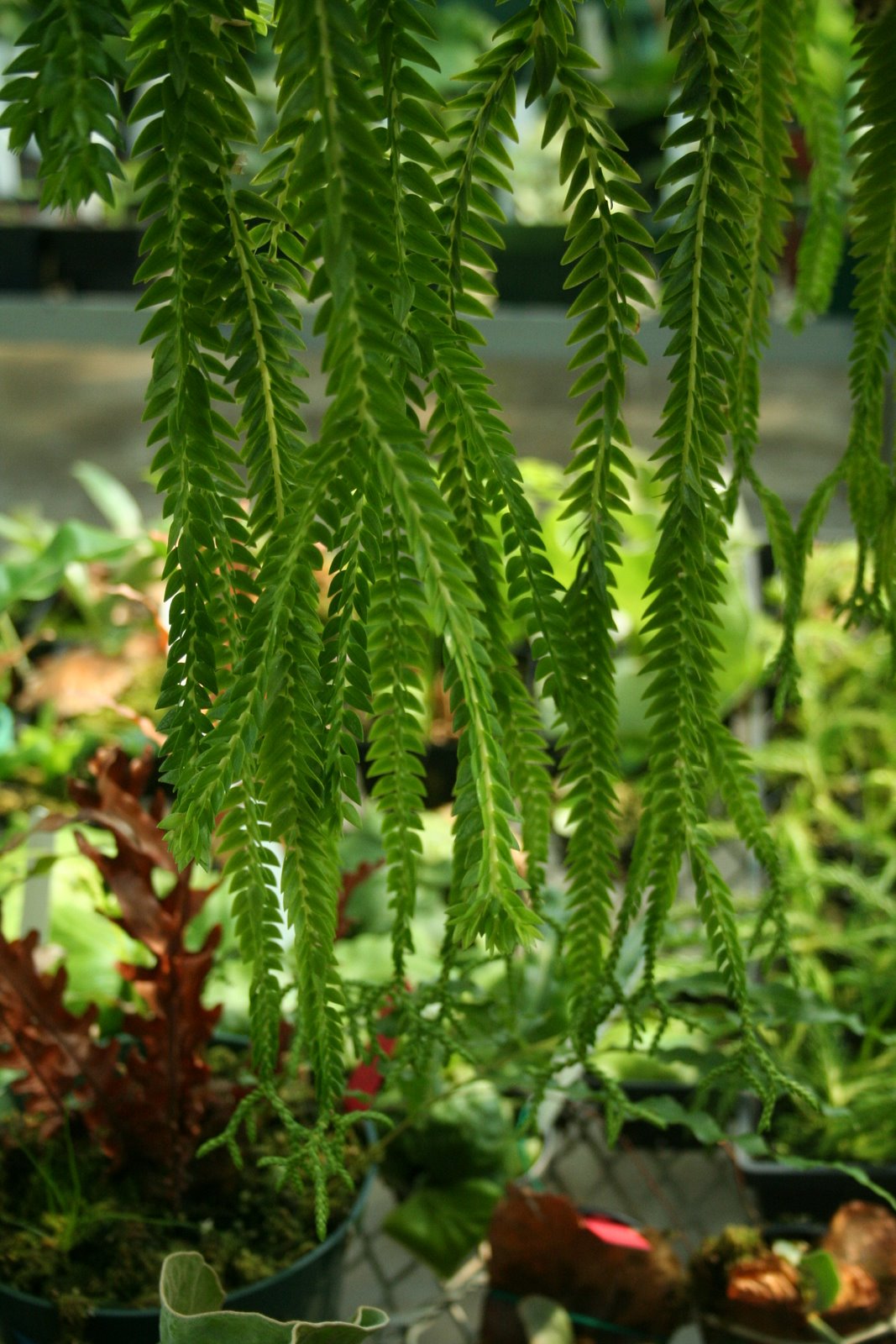
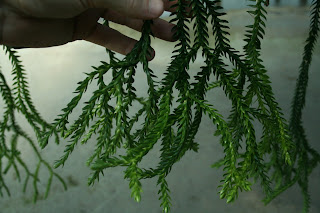
Huperzia phlegmariodes

Huperzia phlegmariodes is native to Halmaheras, PNG, Solomons, Queensland, Fiji and New Caledonia. All the plants that are found in these areas are all different looking.

Huperzia phlegmariodes (QLD native layered)


Here is a another form of Huperzia phlegmariodes QLD was sold in the US as H. obtusifolia. This form in much thiner then most plant in cultivation.


Huperzia kandavuensis formally Huperzia phlegmarioides Fiji Layered


huperzia Sp. Philippines native


Posted by Picasa

Huperzia carinatum (Mt. soi dao)

Posted by Picasa

Huperzia tetrastichoides (square tassel fern)

There are 2 forms of tetrastichoides standard and corkscrew. Queensland Australia native species. This species was originally named prolifera and I was told that it was renamed tetrastichoides.


The one on the Left is QLD corkscrew bootlace and the Right is standard form...

Huperzia phlegmaria Yellow tips


Posted by Picasa


Huperzia carinata Philippines

This is an interesting form of H. carinata the tassels are vary wide.


Huperzia phlegmariodes (fiji layered)


Posted by Picasa

Huperzia follosa (fiji gold tip)


Posted by Picasa

Huperzia brassii PNG (little john)

Huperzia brassii was collected by Len Brass on the Uumaa River in Papua New Guinea over seventy years ago


Posted by Picasa

Huperzia dalhousiana

Huperzia dalhousiana is found in NE-Queensland, peninsular Malaysia (Penang Isl., Pahan, Melaka), Borneo, New Guinea.


In these photos I show these 2 different species of Huperzia that are found in Malaysia. The one on the left is H. dalhousiana and the one on the right is H. goebelii. These species are varry differnet then eachoter. H. dalhousiana is rare in cultivation


There are two form of H. dalhousiana in the cultivation from Malaysia.


These is an extremely rare glimpse of one of the rarest species in Australia. Rummers of this species extinction go around. Deforestation has destroyed this species way or life. I was sent these images showing some of the last wild populations of this rare species. Let us hope that they allow this in cultivation that is may become propagated.

Think it is interesting that it is growing inside of a Platycerium.